Massachusetts
Garage door repair in Suffolk County, MA
Garage door repair and replacement in Suffolk County, MA begins with the part that quit, whether a spring, a cable, the track or the opener. Half the homes in Suffolk County were built before 1948 (Census ACS 2019–2023). Suffolk County averages 92 days a year with a low at or below 32°F (NOAA 1991–2020 normals).
Call (866) 332-1030 to schedule a visitCalls may be recorded. Describing the problem commits you to nothing.
Towns and communities in Suffolk County
What is different about Suffolk County
Hurricane risk
Hurricane risk is rated relatively high in Suffolk County on FEMA's National Risk Index. That makes the wind-load label on a replacement door worth reading: its positive and negative pressures, in pounds per square foot, should meet what the building department asks for.
Source: FEMA National Risk Index; ICC Building Safety Journal, garage door provisions in the International Residential Code
Openers older than the safety rule
The median home in Suffolk County dates from before 1948. Openers made for sale from January 1, 1991 must reverse on contact, and from 1993 they also need a second, external protection such as photo-eye sensors near the floor, so an opener that came with an older house may have neither. Look for sensors by the floor, and if there are none, run the reverse test before anything else.
Source: U.S. Census Bureau, American Community Survey 2019–2023 5-year estimates; CPSC Publication 523, non-reversing automatic garage door openers
Freezing nights
On average, Suffolk County has 92 days a year with a low at or below 32°F at the nearest NOAA climate normals station, about 2 miles away. On those mornings the bottom seal can freeze to the slab, and an opener pulling against it looks broken when it is not; free the seal first.
Renters call too
Most homes in Suffolk County are rented. The line on this site takes calls from renters as well as owners; who pays for the repair is a matter for the lease.
Source: U.S. Census Bureau, American Community Survey 2019–2023 5-year estimates
What stopped working?
-
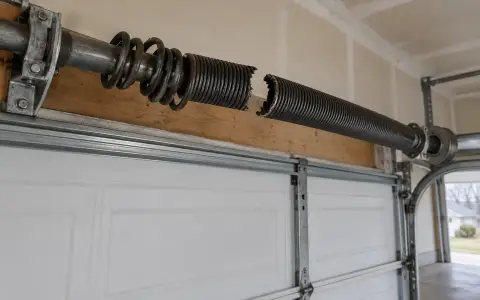 Broken springA loud bang, then a door that lifts a few inches or feels far too heavy.
-
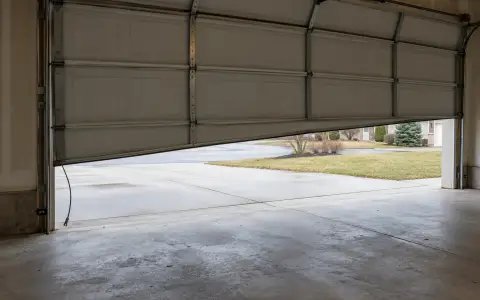 Snapped cableThe door hangs crooked, or a cable dangles beside the track.
-
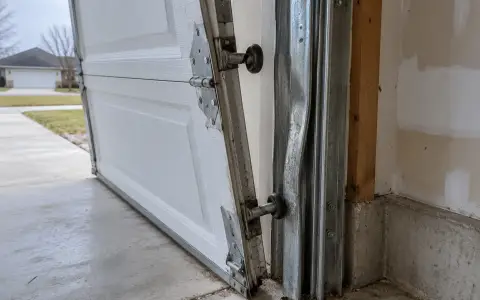 Off trackRollers have left the track and the door tilts, binds or grinds.
-
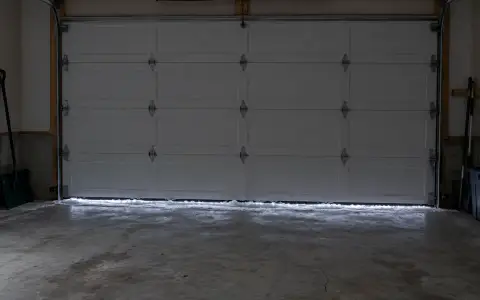 Won't openNothing happens, the opener hums, or the door lifts a few inches and quits.
-
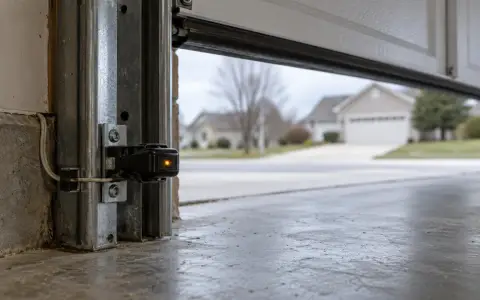 Won't closeThe door starts down and goes back up, or closes only while the button is held.
-
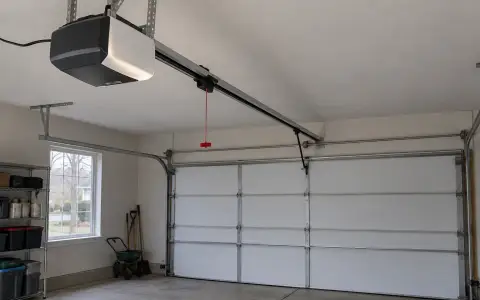 Opener runs, door doesn'tThe motor hums or runs and the door stays where it is.
-
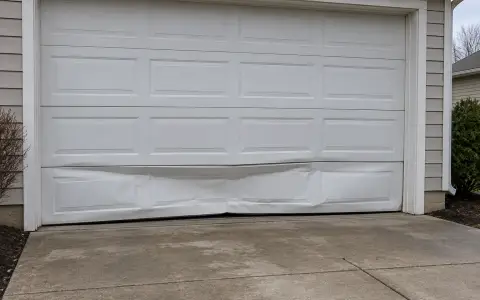 Car hit the doorPanels bent, tracks pushed out, and the garage may not close.
Who licenses the work in Massachusetts
Massachusetts's contractor licensing is run by the Office of Consumer Affairs and Business Regulation, Home Improvement Contractor Program (HIC); Office of Public Safety and Inspections (Construction Supervisor License). This site did not confirm whether every garage door job falls under that license. Ask the company which license it holds, if any, and look it up in the state registry.
What you will be asked
- What stopped working, in one sentence: a bang and then the door would not lift, a crooked door, a door that goes back up.
- The door: sectional panels or one solid piece, one car wide or two, and roughly how old.
- The springs: a coil on a bar above the door, or springs along the tracks, and whether one shows a gap.
- The name on the opener’s motor housing, and roughly how old it is.
- Whether the door is open or closed right now, and whether a car is inside.
The line takes: repair, replacement and installation of garage doors and openers, for owners and renters, at homes and at commercial buildings. It is not for: buying parts, doors on box trucks and trailers, or a price quoted over the phone without a visit. The price is named after someone has seen the door.